Safest Used SUVs for Daily Commuting

Table of Contents
- What Makes a Used SUV Safe for Daily Commuting
- Used SUV Safety Ratings: What the Data Shows
- Most Reliable Used SUVs for Commuting
- Fuel-Efficient Used SUVs That Save on Gas
- Used SUV Pre-Purchase Inspection: What to Check
- Total Cost of Ownership for Your Daily Commute
- Choosing the Right Used SUV for Your Commute
- Frequently Asked Questions
Last Updated: October 18, 2026
What Makes a Used SUV Safe for Daily Commuting
Choosing among the safest used SUVs for your daily commute means balancing crash protection, driver-assistance technology, reliability, and real-world usability. At Premier AutoGroup, we've helped commuters find safe vehicles without breaking the bank. The difference between meeting safety standards and actively protecting you comes down to three factors: crash-test performance, the safety tech actually available on used models you can afford, and a consistent reliability record.
A commuter SUV must handle stop-and-go traffic, highway merges, and bad weather without fail. Safety isn't just structure; it's how the vehicle responds when something goes wrong and whether its systems give you time to react. The safest used SUVs for daily commuting combine structural integrity with active safety features that reduce the likelihood of an accident in the first place.
Crash-Test Ratings by Model Year and Trim
Crash-test ratings from the National Highway Traffic Safety Administration (NHTSA) and the Insurance Institute for Highway Safety (IIHS) provide the clearest measure of occupant protection. Focus on models from 2018 onwards, when safety technology and structural design improved significantly.
NHTSA uses 1-5 star scores for frontal crash, side crash, and rollover; IIHS uses "Good," "Acceptable," "Marginal," and "Poor." Consistently high ratings across all test types indicate better protection. Pay attention to trim level: some base models lack reinforcements or safety features found on higher trims.
Model year matters more than you might think: a 2022 compact SUV tested under current standards shows different results than a 2015 model of the same nameplate. Many brands updated their safety architecture in 2020-2022, so those vehicles often outperform earlier versions of the same model.
Driver-Assistance Technology on Used Trims
Modern driver-assistance features reduce accidents by catching mistakes before they become collisions. Automatic emergency braking, lane-departure warning, blind-spot monitoring, and adaptive cruise control aren't luxury add-ons; they're protective systems that work constantly during your commute.
Verify which safety tech actually comes standard on that model year and trim. A 2019 midsize SUV in base trim might lack the driver-assistance package offered on higher trims. Ask the dealership for the original window sticker or check the manufacturer's spec sheet to see exactly which safety features are installed.
Pedestrian detection and automatic emergency braking are the most valuable features for daily commuting, especially in urban or suburban environments; they detect obstacles or people in the vehicle's path and brake automatically if the driver doesn't respond.
Used SUV Safety Ratings: What the Data Shows
For a used commuter, the rating that matters is the one attached to the exact model year and trim you are considering, because structures, airbags, and standard driver-assistance equipment change across generations. A nameplate that earns top marks in 2022 may have earned mid-tier results in 2016, and a base trim may lack features standard on a higher trim in the same year.
Pull two rating sources for any used SUV: NHTSA's 5-Star Safety Ratings (frontal crash, side crash, rollover resistance, plus an overall score) and IIHS ratings (Good, Acceptable, Marginal, Poor for crashworthiness, plus separate ratings for crash-avoidance features such as front crash prevention and headlights). A used SUV strong on both sets is a better commuter bet than one strong on only one.
How Ratings Vary by Model Year and Trim
Model-year variation is the most overlooked factor in used-SUV safety shopping. Manufacturers routinely update structure, add standard side airbags, or make automatic emergency braking standard partway through a generation, so the same nameplate can jump from a mixed IIHS result to a top result without a redesign.
Trim-level variation matters just as much. A base-trim used SUV may share structure with a higher trim but lack blind-spot monitoring, rear cross-traffic alert, or adaptive cruise control that were optional or bundled on upper trims. Those features affect real-world crash avoidance even when they don't change the star score. Ask for the original window sticker or a VIN-based feature lookup so you know what is installed, not what was available.
Safety Trade-Offs by Vehicle Size
Size changes the safety equation in ways ratings alone do not capture. Subcompact and compact SUVs are easier to park and maneuver in tight lots, and their lower weight helps fuel economy, but they have less mass to absorb energy in a collision with a larger vehicle, and their higher center of gravity relative to a sedan can affect rollover resistance.
Match the size to your commute. For dense urban and suburban driving with low speeds and tight parking, a well-rated compact with standard automatic emergency braking and blind-spot monitoring is a strong choice. For mostly highway driving with high-speed merges, a midsize with adaptive cruise control and strong side-crash ratings may serve you better. Neither is universally safer; the answer depends on where and how you drive.
When comparing used SUVs in your price range, filter first for model years with published ratings, then narrow by the safety features that matter for your commute. Premier AutoGroup can walk you through reading these ratings and explain what they mean for your specific daily route.
Most Reliable Used SUVs for Commuting
Reliability directly impacts safety: a vehicle that breaks down unpredictably can leave you stranded in poor weather. The most reliable used SUVs for commuting are models with long production runs, strong ownership communities, and documented service records showing consistent maintenance.
Before buying any used SUV, request the service records. A commuter vehicle with documented oil changes, fluid top-ups, and preventive maintenance is far safer than one with a spotty history. Look for servicing at dealerships or reputable independent shops, which indicates the owner took maintenance seriously.
Fuel-Efficient Used SUVs That Save on Gas
Fuel efficiency affects total cost of ownership and reduces time at gas stations. Hybrid used SUVs deliver the best fuel economy: the Toyota RAV4 Hybrid and Lexus NX Hybrid achieve 35-40 mpg combined, cutting fuel costs roughly in half versus conventional models.
Non-hybrid compact SUVs typically achieve 25-28 mpg combined, while midsize models average 22-26 mpg. Subcompact SUVs can reach 30+ mpg but sacrifice interior space and cargo capacity. Prioritize fuel efficiency that doesn't compromise the safety features you need; exceptional mileage without modern safety tech is a poor trade-off.
All-wheel drive reduces fuel economy by 2-3 mpg versus front-wheel drive on the same model. If your commute involves snow or ice, that trade-off is worthwhile; in mild climates, front-wheel drive saves money and reduces environmental impact.
Used SUV Pre-Purchase Inspection: What to Check
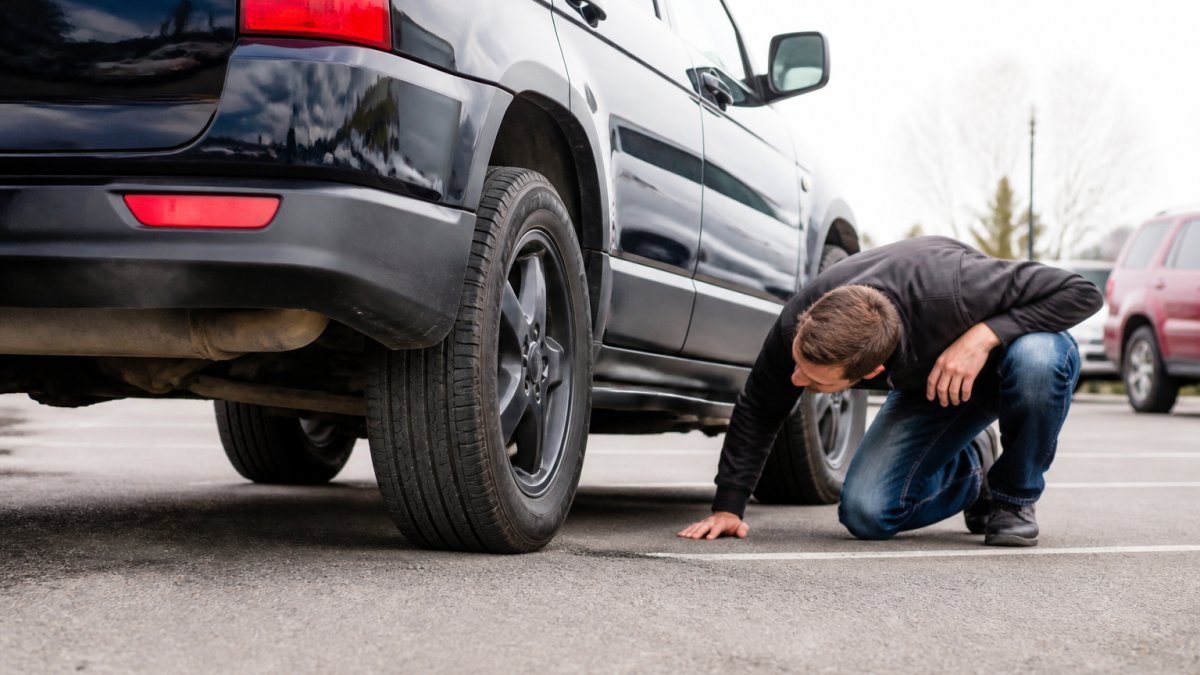 Person crouching beside a used SUV in a parking lot, examining the undercarriage and tire condition during a pre-purchase inspection, natural daylight
A pre-purchase inspection is where used-SUV shopping separates from new-car shopping, because you're evaluating a specific vehicle's history and condition rather than a nameplate's reputation. Have an independent mechanic inspect any used SUV before purchase, going beyond a generic used-car checklist to cover the safety systems and recall status that matter most for daily commuting.
Verify Recall Status and Safety System Function
Start with recalls. Every used SUV has a VIN, and the National Highway Traffic Safety Administration maintains a free VIN lookup that shows open safety recalls. An open recall is not automatically a dealbreaker, but it is a negotiating point and a task to complete before you rely on the vehicle. Ask the seller for proof that outstanding recalls were performed, and confirm the remedy was completed at an authorized dealer.
Next, verify the safety systems actually work, not just that they're listed on the window sticker. Test seat belts for smooth retraction and locking, confirm airbag warning lights illuminate at startup and then go out, and check the tire pressure monitoring system.
Inspect Structure, Tires, and Service History
Exterior and underbody inspection should focus on collision repair or rust that could compromise structural integrity. Look for mismatched paint, uneven panel gaps, and fresh undercoating that might hide rust, and check frame rails and floor pans for bends, welds, or heavy corrosion. Tires should wear evenly; uneven wear points to alignment or suspension problems that affect handling and stopping distance.
Test the brakes for pulsation or grinding, listen for unusual engine noises at startup, and check that the transmission shifts smoothly. Request maintenance records and a vehicle history report from Carfax or AutoCheck. A clean title with documented, regular service is worth paying more for; red flags include multiple owners in a short period, service gaps longer than a year, and evidence of flood or major collision repair.
A typical independent inspection costs roughly $150 to $300 and can uncover problems that cost far more to repair. Bring the inspection report and service records to your negotiation, and treat any unresolved safety recall or inoperative safety feature as a reason to walk away or renegotiate.
Total Cost of Ownership for Your Daily Commute
Purchase price is only part of the equation. A used SUV that costs $2,000 less but needs $1,500 in repairs within the first year becomes more expensive than a slightly pricier alternative with a clean inspection.
Fuel costs depend on commute distance and local gas prices. A 30-mile daily commute (roughly 600 miles per month) in a 25-mpg SUV costs roughly $75-90 monthly, while a 35-mpg hybrid costs $55-70.
Insurance costs vary by model, age, and driving record. Compact SUVs typically cost less to insure than midsize or full-size models, and insurers reward strong crash protection and modern driver-assistance tech with lower premiums.
Maintenance and repairs are where reliability matters most. Premier AutoGroup can discuss expected maintenance costs for specific models you're considering.
Choosing the Right Used SUV for Your Commute
The best used SUV for your commute balances safety ratings, reliability, fuel efficiency, and affordability. Define your priorities first, all-wheel drive, cargo space, maximum budget, then filter for vehicles that meet them while showing strong crash-test ratings and driver-assistance technology.
Compare at least three models, a compact SUV, a midsize option, and possibly a hybrid, to understand the trade-offs. Test-drive each on your actual commute route if possible, noting how it handles your regular roads, parking situations, and traffic patterns.
When you're ready to buy, bring the pre-purchase inspection report and maintenance records to your negotiation.
Finding the safest used SUV for daily commuting doesn't require compromising on budget or settling for an unreliable vehicle. The combination of strong crash-test ratings, modern safety technology, proven reliability, and reasonable fuel economy exists across multiple price points.
Frequently Asked Questions
What safety features should I look for in a used SUV?
Prioritize automatic emergency braking, blind-spot monitoring, lane-departure warning, and adaptive cruise control. These driver-assistance features reduce collision risk in stop-and-go commuting. Check the vehicle's trim level, base models often lack these technologies. Verify that airbag systems are intact and recall history is clean. NHTSA crash-test ratings should be at least 4 stars overall; look for 5-star ratings in front crash and rollover tests, which are critical for SUV safety.
How can I check the used SUV safety ratings before buying?
Visit NHTSA.gov and search by model year and model name. Ratings appear for front crash, side crash, and rollover tests, each scored 1-5 stars. Insurance Institute for Highway Safety (IIHS) also publishes ratings on IIHS.org. Compare ratings across model years, a 2022 model may have higher safety standards than a 2018. Request the vehicle's full safety record and recall history from the dealer before purchase.
Are compact SUVs safer than midsize SUVs for daily commuting?
Safety depends more on crash-test performance and driver-assistance features than size alone. Midsize SUVs typically score well in rollover protection due to higher weight distribution, while compact SUVs often have better maneuverability in stop-and-go traffic. Check NHTSA ratings for your specific model and year, a top-rated compact SUV outperforms a lower-rated midsize option. For commuting, prioritize visibility, automatic emergency braking, and blind-spot monitoring over vehicle class.
What's the total cost of ownership for a used SUV commuter vehicle?
Factor in purchase price, fuel costs, maintenance, insurance, and repairs. Fuel-efficient used SUVs (25+ mpg) reduce gas expenses significantly. Reliable models with strong safety ratings typically cost less to insure. Certified pre-owned SUVs often include extended warranties, lowering unexpected repair costs. Compare ownership costs across model years, a slightly older, highly reliable model may cost less overall than a newer, less dependable option.
