How to Prepare Your Car for a Dealership Trade In

Last Updated: November 17, 2026
Quick Summary
To prepare for a dealership trade in, start with an honest condition assessment, then clean the car inside and out and complete only cheap, visible repairs that pay off. Gather your title, driver's license, registration, all keys, and service records, and check your car's market value before the appraisal.
- Walk around the car checking body panels, windshield chips, tire tread, and warning lights.
- Wash, vacuum, and wipe down the car, then remove all personal belongings.
- Fix cheap visible items like burned-out lights, worn wiper blades, and missing gas caps.
- Skip major engine work, full paint correction, and interior reupholstery before trade-in.
- Bring the title, valid driver's license, current registration, and all keys including spare fobs.
Table of Contents
- Start with a Realistic Condition Assessment
- Clean the Car Inside and Out
- Prioritize Minor Repairs That Pay Off
- What to Bring When Trading in a Car
- How to Get the Best Trade-In Price for Your Car
- How to Trade in a Car That Is Not Paid Off
- What Not to Do When Trading in a Car
- Book Your Trade-In Appraisal at Premier AutoGroup
- Frequently Asked Questions
Start with a Realistic Condition Assessment
A dealership trade in starts with one honest question: what would you pay for this car? Answer that before you touch a sponge or a wrench. The number you imagine and the number an appraiser writes down rarely match, and the gap usually comes from condition, not from the dealer being unfair.
Walk around your car with fresh eyes. Check the body panels for dents, the windshield for chips, and the tires for tread depth. Sit inside and look at the seats, the carpet, and the dashboard. Then check that every warning light stays off after you start the engine.
The Federal Trade Commission's Auto Buyer Study found that some shoppers research their trade-in value before they ever visit a dealer. That is the right instinct, and it starts with an honest look at what you own.
Write down what you find. A short list keeps you honest and gives you a baseline to compare against later.
Clean the Car Inside and Out
Clean cars appraise better. A wash, a vacuum, and a wipedown cost you a few hours and no money, and they change how an appraiser reads the whole vehicle. A car that looks cared for reads as a car that was maintained.
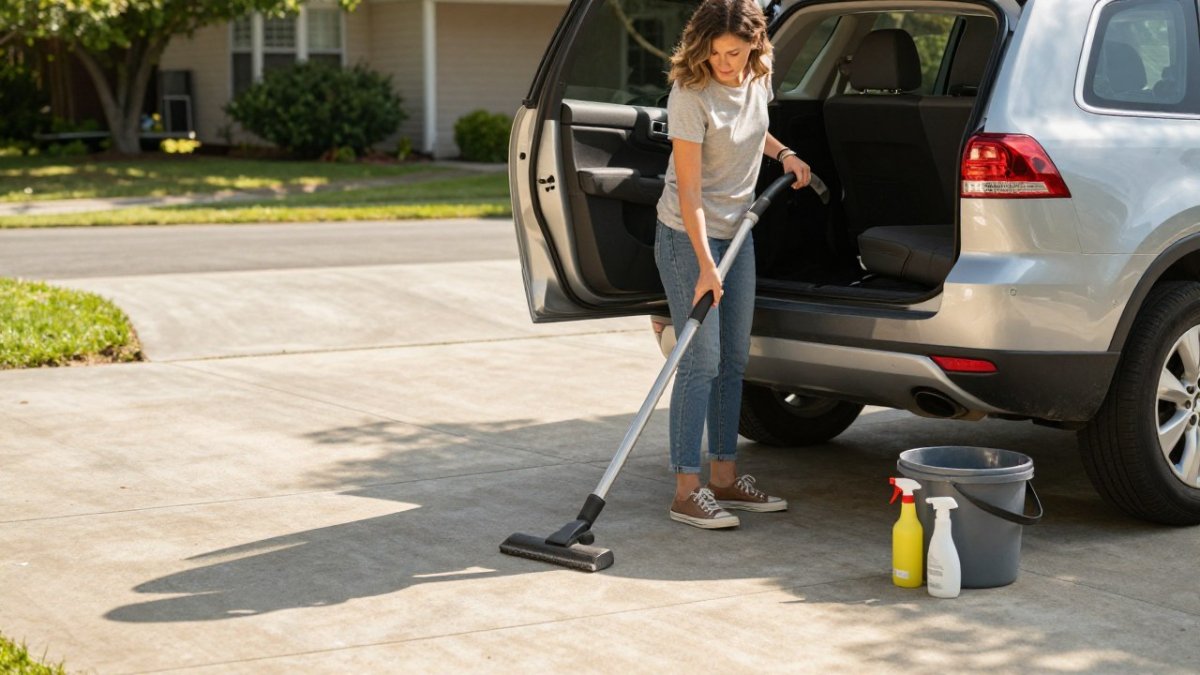 A woman vacuuming a silver SUV to prepare the car for a dealership trade in.
Work outside first. Wash the body, clean the wheels, and dry everything so water spots do not set. Skip the wax if you are short on time; clean paint matters more than shine.
Then move inside:
- Vacuum the seats, carpet, and trunk
- Wipe the dashboard, console, and door panels
- Clean the inside of the windows
- Remove trash, receipts, and loose change
- Empty the glovebox and door pockets
Pull out personal belongings last. Phone chargers, sunglasses, and gym bags all go. So does anything in the trunk you plan to keep.
Prioritize Minor Repairs That Pay Off
Not every repair is worth making before a trade-in. The question is not "does this fix the car?" but "will this fix raise the offer by more than it costs?" Small, visible, safety-related fixes often return their cost at appraisal, while cosmetic bodywork and major mechanical repairs often do not.
Use this three-tier framework to sort your list.
Tier 1: Fix these, cheap, visible, and expected. These are the items an appraiser will note on the inspection sheet and deduct for if left undone. They cost little and remove easy reasons to lower the offer:
- Replace burned-out headlights, brake lights, or turn signals
- Swap worn wiper blades
- Top off tire pressure and check tread depth
- Top off washer fluid and coolant
- Replace a missing gas cap or damaged floor mats
Tier 2: Weigh these, moderate cost, uncertain return. Get a written estimate first, then ask yourself whether the deduction an appraiser would take for the flaw is likely larger than the repair bill. Weigh a cracked windshield or worn tires against the deduction an appraiser would take. Some repairs may cost about what they add to the offer, and others may cost more than the offer would rise, so disclose those and let the number reflect them.
Tier 3: Skip these, expensive, invisible to the offer. Major engine or transmission work, full paint correction, and interior reupholstery rarely pay back at trade-in. A dealer's reconditioning costs are typically different from retail repair prices, so a repair may not return its full cost in the trade-in credit. Disclose the issue instead of fixing it.
If a warning light is on, get the code read before your appointment. Sometimes it is a loose gas cap. Sometimes it is a real repair, and knowing which one lets you decide whether to fix it or disclose it.
Watch out: clearing a check engine light right before an appraisal can backfire. A freshly cleared code may return and make a dealer trust your car less.
For repairs beyond the basics, our team at Premier AutoGroup's service center handles inspections and fixes without pushing work you do not need.
Sort your repair list into three tiers before your appraisal.
| Tier | What to do | Examples |
|---|---|---|
| Tier 1: Fix these | Cheap, visible, expected fixes | Replace burned-out lights, worn wiper blades, missing gas cap |
| Tier 2: Weigh these | Get a written estimate first | Cracked windshield, worn tires |
| Tier 3: Skip these | Expensive, invisible to the offer | Major engine or transmission work, full paint correction, reupholstery |
What to Bring When Trading in a Car
A trade-in appraisal goes faster and ends higher when you arrive with the right paperwork and a car that is ready to inspect. Treat the day before and the day of as two separate tasks.
The day before:
- Confirm your appointment time and ask whether the appraiser needs the car washed or left as-is
- Pull your title out of the safe and check that the name matches your driver's license
- If you still owe money, request a payoff quote good through your appointment date
- Gather service records into one folder
- Remove personal belongings, toll transponders, and garage door openers
On appraisal day, bring:
- Vehicle title, or the lender's information if you still owe money
- Valid driver's license
- Current registration
- All keys, including spare fobs
- Owner's manual and any warranty paperwork
- Maintenance and service records
- Loan payoff statement, if the car is financed
- Any accessories that came with the car
Those first four items cover most trade-ins. Everything else prevents delays and supports your position.
Gather your service records into one folder. Oil change receipts, tire rotations, and repair invoices all support your asking position. Records show the car was maintained, and that matters most on higher-mileage vehicles. Lay the folder on the desk when the appraiser sits down; it signals the car has nothing to hide.
Expect a short test drive and a visual inspection that covers tires, lights, warning indicators, and body panels. A clean, quiet car with records in hand moves through that inspection quickly.
Watch out: if the title is held by a lender, do not promise the dealer a title you do not have. Confirm the payoff process in writing before you sign anything, because a missing or delayed title can stall the deal for days.
How to Get the Best Trade-In Price for Your Car
The best trade-in price comes from preparation and information, not from hard bargaining. Know your car's market value, present it well, and let the appraiser see a vehicle with nothing to hide.
Check pricing on a site like Kelley Blue Book or Edmunds before you go. Enter your mileage, trim level, and condition honestly. Print or screenshot the range so you have a reference point in the room.
Then do three things:
- Bring your service records and lay them out
- Mention recent repairs and new tires
- Ask how the offer was calculated
That last question matters. A fair dealer will walk you through condition, mileage, and market demand. If the number comes back low, ask what would raise it. Sometimes the answer is a specific repair you can still make.
Get an offer before you start shopping for the replacement. A trade-in number is use, and knowing it early keeps the conversation about the whole deal rather than one line item.
How to Trade in a Car That Is Not Paid Off
You can trade in a financed car. The dealer pays off your lender and applies the difference to your deal. The process just takes a few extra steps and a little patience.
First, find your payoff amount. Call your lender or check your account online and ask for a payoff quote good through your appointment date. A payoff quote differs from your current balance because it includes accrued interest (What is a payoff amount and is it the same as my current balance?).
Then compare that payoff to your trade-in offer:
- Offer higher than payoff: you have equity, and it goes toward your next car
- Offer lower than payoff: you have negative equity, and the difference rolls into your new loan
Negative equity is common and manageable, but it raises your new payment. Ask for the numbers in writing before you sign anything.
If you are weighing whether extra coverage affects your situation, read our guide on whether an extended warranty is worth buying before your appointment.
What Not to Do When Trading in a Car
Do not lie about condition, do not clear codes, and do not strip the car before you hand over the keys. Dealers inspect trade-ins closely, and small deceptions cost you credibility at the exact moment you need it.
Avoid these moves:
- Hiding accident history or prior damage
- Removing floor mats, spare tires, or the second key
- Clearing warning lights to mask a problem
- Skipping the test drive the dealer requests
- Accepting the first offer without asking how it was built
One more: do not leave your personal data in the car. Modern vehicles store phone pairings, home addresses in navigation, and garage door codes in the infotainment system (Selling your car? Clear your personal data first.). Delete paired phones and saved destinations, and unpair any connected-car app before you trade.
If you plan to buy used from the same lot, our checklist on whether buying a used car from a dealership is safe covers the questions worth asking.
Book Your Trade-In Appraisal at Premier AutoGroup
A clean car, a folder of records, and an honest condition report do the heavy lifting. The appraisal itself takes minutes when you arrive prepared.
At Premier AutoGroup, we are a five-time winner of South Central Idaho's best independent car dealership, and we hold a 4.8-star Google rating. Our advisor-style team focuses on honest, no-pressure guidance and top-dollar trade-in offers, and we offer access to affordable and manageable car loans.
Bring your car, your title, and your questions. We will walk you through the offer line by line.
Ready to see what your car is worth? Get a fair, no-pressure trade-in offer from a team that explains every number. Get started with Premier AutoGroup and turn your current vehicle into your next one.
Frequently Asked Questions
What should I do to prepare my car for trade-in?
Start with a realistic condition assessment: check tire tread, warning lights, and fluid levels. Clean the interior and exterior thoroughly, gather maintenance records and your title, and handle any minor repairs that are worth the cost. Then remove personal belongings and connected-car data before your appraisal appointment.
Is it worth trading in your car at a dealership?
A dealership trade-in can save you the time and hassle of a private sale. It also gives you a clean paperwork process. The key is knowing your car's market value and getting a written offer you can compare.
Can I trade in a car that is not paid off?
Yes. The dealership will request a payoff quote from your lender and apply your trade-in value to the outstanding balance. If the offer is higher, the difference goes toward your new vehicle. If the balance is higher, you may need to cover the gap or roll it into financing.
What not to do when trading in a car?
Avoid clearing warning lights right before appraisal, skipping maintenance records, leaving personal data in the infotainment system, and accepting the first offer without checking market value. Also do not spend on major cosmetic repairs that may not raise the offer by the same amount.
