How to Buy a Used Car Online Safely

Quick Summary
Buying used cars online safely means researching first, running a history report on the VIN, getting a remote video inspection and an independent pre-purchase inspection, verifying the seller, and paying with traceable methods. Never wire money before you have confirmed the title and the vehicle.
- Set a total budget that includes tax, fees, and registration before you start looking.
- Run a used car history report on the VIN and check the title status first.
- Ask for a cold start video walkaround and close-up photos of tires and warning lights.
- Hire an independent mechanic for a written pre-purchase inspection before you pay.
- Avoid wire transfers and gift cards, and use a credit or debit card for dispute rights.
Table of Contents
- Start With Research Before You Click Buy
- Run a Used Car History Report on Every Listing
- Check Photos, Video and Remote Inspection Options
- Get a Pre-Purchase Inspection for a Used Car Before You Pay
- Compare Dealers and Private Sellers Online
- Spot Online Used Car Scams and Seller Red Flags
- Pay Securely and Review the Paperwork Before Delivery
- Frequently Asked Questions
Start With Research Before You Click Buy
Buying used cars online can save time, but only if you know what to look for. Last Updated: November 24, 2026
According to Urban Science and The Harris Poll 2026 study on U.S. auto buying, 44% of auto buyers now spend more time researching before they contact a dealer. That means most shoppers arrive with questions already in mind. Your research should start the same way.
Before you click buy, build a short list of what you need. Think about seating, fuel economy, and budget. Then check the listing price against similar vehicles nearby.
Here is a simple way to start:
- Set a total budget that includes tax, fees, and registration
- List your must-haves, such as all-wheel drive or third-row seats
- Save three to five listings that fit those needs
- Compare prices for the same year, model, trim, and mileage
Price comparison matters because online listings can look similar even when the condition differs. A slightly cheaper car may need more repairs. Look closely at the details before you decide which one is the better deal.
Writing your questions down before you contact any seller about buying used cars online can help you stay focused.
Run a Used Car History Report on Every Listing
A used car history report shows what has happened to a vehicle over its life. It can reveal accidents, title problems, and odometer issues before you spend a dollar.
Ask the seller for the VIN, then run a report yourself. Check the title status first. A clean title is the standard you want. A salvage or rebuilt title means the car was once declared a total loss, and that can affect insurance and resale value.
Look for these items in the report:
- Title status, including any salvage or flood brands
- Accident and damage history
- Odometer readings over time
- Service records and maintenance history
- Number of previous owners
Watch out: A report with no entries does not guarantee a clean history. Not every repair gets reported, so treat the report as one tool, not the final answer.
The history report checks are easier to scan when you know which items to look for and what each one can reveal.
| Item | What it shows | Why it matters |
|---|---|---|
| Title status | Clean, salvage, or rebuilt | Salvage titles can affect insurance and resale value |
| Accident history | Reported damage over time | Reveals problems before you commit |
| Odometer readings | Mileage recorded across time | Helps spot odometer issues |
| Service records | Maintenance history | Shows how well the car was cared for |
| Previous owners | Number of past owners | Frequent turnover can signal problems |
Check Photos, Video and Remote Inspection Options
Photos show the car, but video shows how it runs and sounds. Ask for a video walkaround with the engine started and the interior and trunk shown clearly. A good walkaround starts with a cold start, so ask the seller to start the engine only when you are on the call or in the video. Listen for unusual noises, watch for smoke, and check that all warning lights turn off after the engine starts.
Request close-up shots of the tires, the dashboard warning lights, and any dents or paint mismatches. Ask for photos of the undercarriage if the car is an SUV or truck. These angles often reveal problems that a quick overview hides. Use a remote inspection checklist to organize what you ask for:
- Cold start video with the hood open and the exhaust visible
- Dashboard with the ignition on, showing all warning lights
- Odometer reading with the VIN visible in the same frame
- Tire tread depth photos with a penny or tread gauge
- Underbody photos showing the frame, exhaust, and any rust
- Close-ups of panel gaps, paint, and glass for mismatched panels or cracks
- Interior photos of the seats, dashboard, and cargo area
- Service records and receipts for recent maintenance
A virtual tour or live video call can help you ask questions in real time. Ask the seller to walk around the car with the camera and point out any flaws. A remote test drive is harder to arrange, but some dealers allow a supervised one with a local expert. If you cannot arrange a test drive, ask for a video of the car being driven at highway speed and during a slow turn.
Remote inspections have clear pros and cons:
- Pros: Saves travel time, lets you see the car from home, and gives you a second look at detail shots
- Cons: You cannot smell the interior, feel the brakes, or spot small leaks in person
Use remote tools to narrow your list. Then plan an in-person check before you commit. If you cannot inspect in person, hire an independent mechanic to perform a pre-purchase inspection and send you a written report with photos.
Get a Pre-Purchase Inspection for a Used Car Before You Pay
A pre-purchase inspection is the best protection against hidden repairs. An independent mechanic can check the engine, brakes, suspension, frame, and tires. The cost is small compared with a major repair bill after the sale. A used car inspection guide can help you know which areas to ask the mechanic to examine before you commit to the sale.
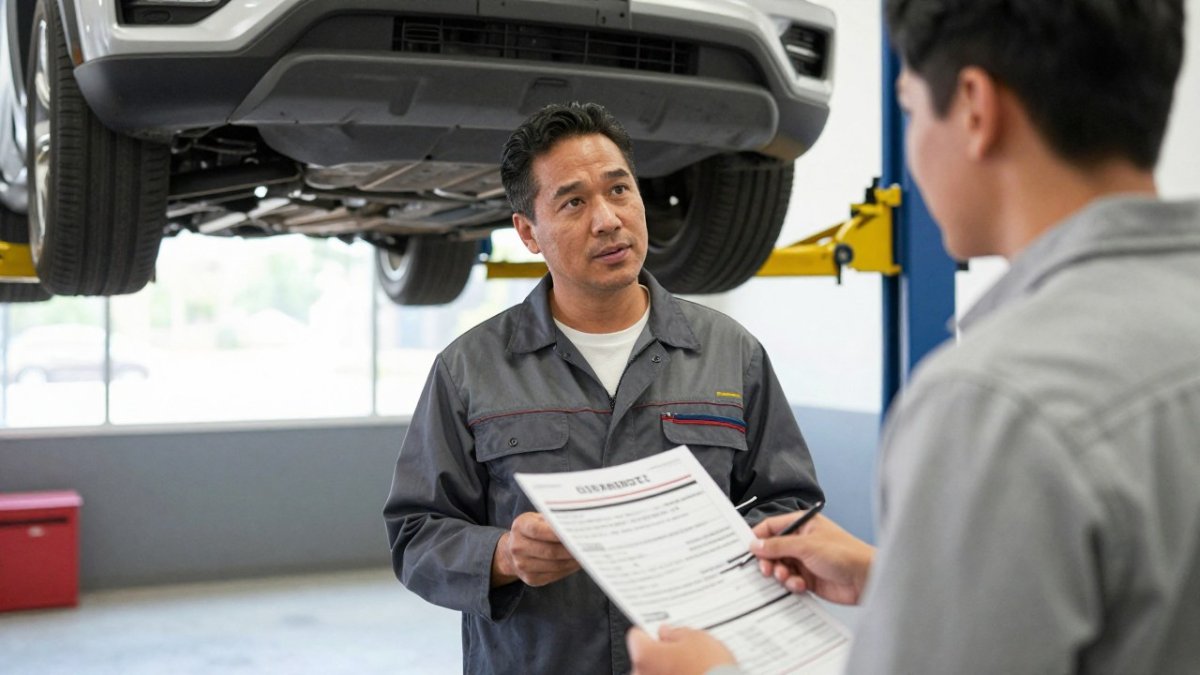 A mechanic and a buyer reviewing a used SUV on a lift during the process of buying used cars online.
Choose a mechanic who does not work for the seller. Ask for a written report with photos and a repair estimate. Bring a printed checklist so you can track each item.
Ask the mechanic to check these areas:
- Engine leaks, oil condition, and warning codes
- Brake pad and rotor wear
- Suspension and steering play
- Frame damage or uneven panel gaps
- Tire tread depth and matching brands
If the seller refuses an inspection, treat that as a red flag (Buying a Used Car From a Dealer). A legitimate seller should welcome a professional look.
Compare Dealers and Private Sellers Online
Dealers and private sellers both sell used cars online, but the buying experience is different. Dealers often handle paperwork, financing, and sometimes warranties. Private sellers may offer lower prices, but they rarely provide the same protections.
Independent dealerships may offer different pricing, financing, and service levels. Warranty terms vary, so read them carefully. Learn what to check before you buy from Premier AutoGroup's guide to are independent dealerships worth it for used cars.
When you compare sellers, look at reviews, licensing, and how quickly they answer questions. A business that responds clearly and openly is usually a safer choice.
Spot Online Used Car Scams and Seller Red Flags
Online car scams often follow a few patterns. The price looks too good to be true. The seller wants a deposit before you see the car. Or the seller says they are overseas and cannot meet.
Watch for these warning signs:
- Pressure to pay quickly or by wire transfer
- Refusal to provide the VIN or a history report
- Photos that look copied from other listings
- A seller who cannot answer basic questions about the car
- Requests to move the sale off the listing platform
Verify the seller's identity before you send money. Ask for a phone call, and confirm the address where the car is located. If something feels off, walk away.
Pay Securely and Review the Paperwork Before Delivery
Payment is where many online buyers get hurt. The safest approach is to treat every dollar you send as irreversible until you have verified the seller, the title, and the vehicle. A common pattern in fraud cases is a seller who pressures you to wire a deposit before you have seen the car or confirmed the title holder's name.
Start by verifying the seller's identity. Ask for a government-issued photo ID and confirm that the name matches the title and the listing. If you are buying from a dealer, check the dealership's license with your state's motor vehicle agency. For private sellers, request a phone call and ask questions that only the owner could answer, such as where the car was serviced or why they are selling. A seller who cannot or will not answer basic ownership questions is a risk.
Use traceable payment methods. Credit cards and debit cards offer dispute rights if the car is not delivered as described (What To Do if You’re Billed for Things You Never Got, or You Get Unordered Products). Many marketplaces and escrow services hold funds until both parties confirm the transaction. If you use an escrow service, confirm it is a legitimate, licensed business and that the escrow instructions come from the escrow company directly, not from the seller. A common scam involves a fake escrow site that looks real but is controlled by the seller.
Avoid wire transfers, gift cards, and payment apps that offer no buyer protection. Once a wire transfer is picked up, it is nearly impossible to reverse. The same is true for gift cards and many peer-to-peer payment apps. If a seller insists on one of these methods, walk away.
Before you send any money, review the purchase agreement line by line. Confirm the out-the-door price, which should include sales tax, documentation fees, and any delivery charges. Check the financing terms if you are borrowing: the annual percentage rate, the down payment, the monthly payment, and the total amount financed. Look for add-ons such as extended warranties, gap insurance, or paint protection, and confirm whether they are optional. Ask about the cancellation policy and the return policy in writing.
Before delivery, confirm these items:
- The title is clean and in the seller's name
- The vehicle identification number on the car matches the title and the listing
- The vehicle matches the listing and your inspection report
- Registration and title transfer steps are clear for your state
- The return or refund policy is in writing
If the delivered car differs from the listing, document it with photos and video right away. Contact the seller in writing and keep copies of all messages. Ask for a resolution before you accept the car. If the seller will not resolve the issue, you may need to escalate to the marketplace, your state's consumer protection office, or your credit card issuer if you paid by card.
Frequently Asked Questions
What is the most reliable website to buy a used car?
No single website is reliable for every buyer, so judge each platform by what it lets you verify. Look for listings that include a full vehicle history report, clear photos and video, a return or inspection window, and transparent pricing. Compare at least two sources, and confirm the seller's identity and the car's title status before you commit any money. A reputable platform makes these details easy to find; if it hides them, treat that as a warning sign.
Is it safe to buy a used car online without seeing it first?
It can be safe, but buying a used car online without seeing it first carries more risk. Request a live video walkaround, a VIN-based history report and an independent inspection performed near the vehicle's location. The Federal Trade Commission notes that online used car shopping can make finding, researching and negotiating harder, so take extra time to verify the car's condition and the seller's identity before paying.
How can I tell if an online used-car listing is legitimate?
Start by checking whether the VIN in the listing matches the VIN on the vehicle's title and history report. Be cautious of prices far below market value, sellers who refuse a phone call or in-person meeting, and requests for wire transfers or gift cards. Verify the seller's name and address against the title, and compare the listing's photos with the car's history for signs of reuse from another ad.
What paperwork should I get when buying a used car online?
Ask for the certificate of title, a bill of sale, a vehicle history report and the Buyers Guide posted on the car if it is a dealer sale, since it shows whether the car has a warranty or is sold as is. If you are financing, review the contract terms carefully, including the out-the-door price, sales tax, registration fees and the interest rate before you sign.
